QR tag or engraved tag? How to use both on a dog's collar (UK)
Updated 6 October 2026 · 5 min read
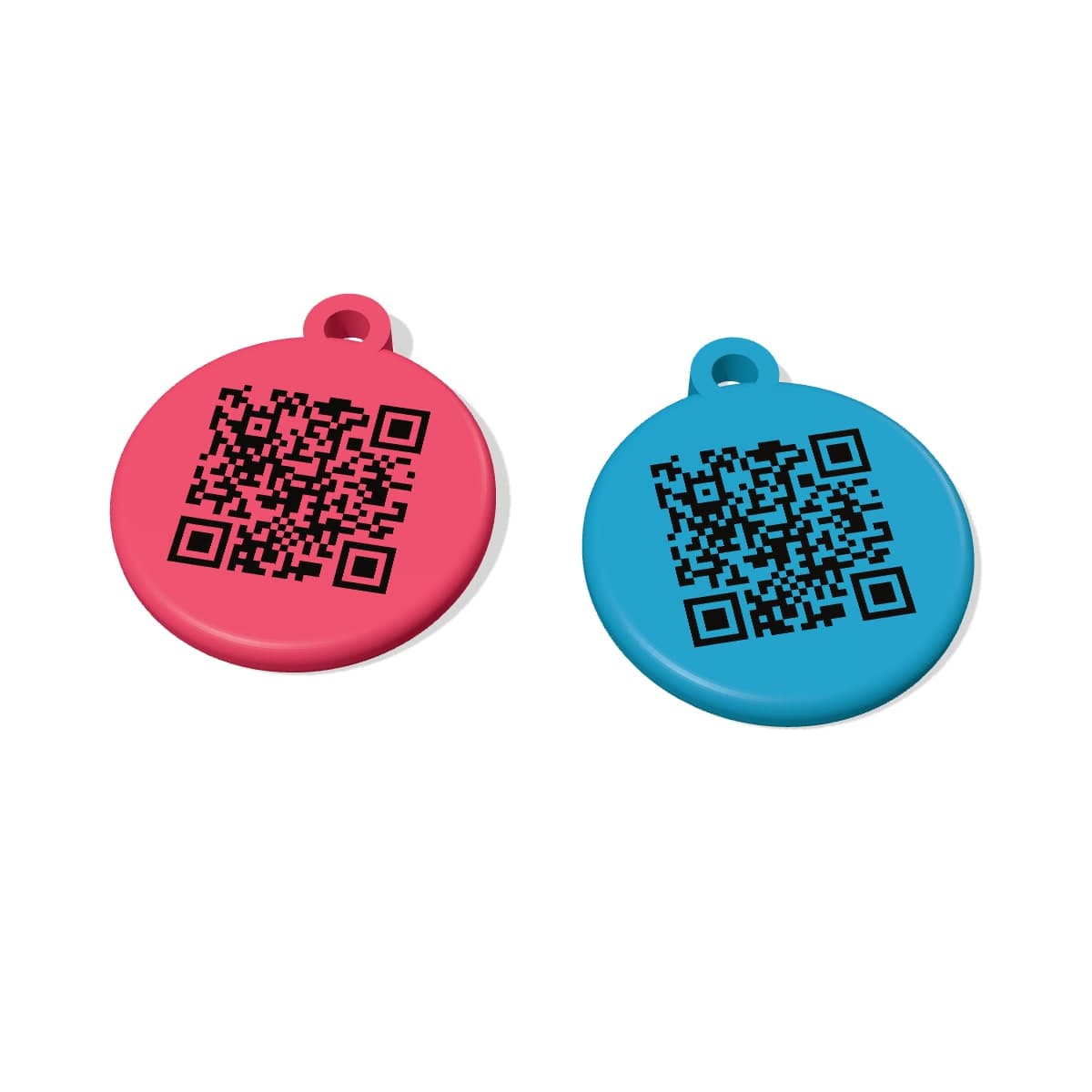
This isn’t really a choice between two tags. An engraved tag is what the law asks for on a dog in public; a QR tag gives whoever finds your pet a fast, private way to reach you, with room for everything the engraving can’t hold. That’s why we suggest both on a dog’s collar, or one tag that carries both: our personalised dog tags have your details on the back and the QR code on the front.
Dog tag wording maker →Get the wording for your engraved tag, checked against UK law.What the law says
In England, Scotland and Wales a dog in a public place must wear its owner’s name and address, on a collar or on a tag attached to it (the Control of Dogs Order 1992). A QR code doesn’t show a name and address, so on its own it doesn’t meet that. Our dog tag law guide covers the exact wording and the fines.
What an engraved tag can’t do
- It fits a few words, so there’s no room for medical needs or a second contact.
- It can’t be changed. New number, new house, new sitter: new tag.
- Everything on it is readable by anyone who gets close, including in a photo.
- It says nothing about whether your pet is missing right now.
What a QR tag adds
- A photo, so a finder knows they have the right dog.
- Medical and behaviour notes, in as many words as you like.
- A message form, so finders can reach you without seeing your number.
- Lost mode: the page says the dog is missing, and you’re emailed the moment it’s scanned.
- Changes that take effect straight away, with nothing to re-engrave.
Wearing both without the jingle
- Put your surname, house number and postcode on the engraved tag, and leave your phone number for the profile. Our guide on where to get a dog tag engraved covers where to go and what it costs.
- Use a slide-on engraved tag, or a collar with the details stitched or printed on it, and hang the QR tag alone.
- Check both tags every few months: engraving wears smooth, and a scratched code should be replaced.
Cats are different
No law covers cat tags, and a cat’s collar should be a quick-release one. You can skip engraving and use a light QR tag, with your vet’s details in the notes. Cats in England must be microchipped, which is the part that isn’t optional: see cat microchipping law and should my cat wear a collar.
What it costs over a few years
An engraved tag is a few pounds, until something changes: a new phone number or a house move means a new tag. A QR tag is bought once and edited for free, so keeping your phone number on the QR profile rather than the engraving means the engraved tag only needs replacing when you move.
Quick answers
Is a QR code tag legal in the UK?+
Yes, but not as a dog’s only tag in public. The law asks for your name and address on the collar or tag, so keep an engraved tag or a printed collar as well.
Do I have to put my phone number on the engraved tag?+
No. The law asks for a name and address. A phone number is optional, so you can leave it off the engraving and keep it behind the QR profile instead.
Two tags on one collar: is that too much?+
Usually, yes. For small dogs and cats, use a slide-on engraved tag or a collar with the details on it, so only one tag hangs.
Which tag do finders use?+
Whichever they see first, and both help. In a study of lost dogs in Ohio, a licence or ID tag on the collar got about a quarter of the recovered dogs home, far more than microchips, which few of the dogs had.
Sources (3)
This guide is general information, not legal or veterinary advice. How we write our guides