Personalised dog collars: do they meet UK law?
Updated 6 October 2026 · 3 min read
Yes. UK law asks for your name and address on your dog's collar, and it doesn't have to be on a hanging tag: details embroidered, printed or engraved on the collar itself count. Here's what the law says, what to put on it, and where a tag still earns its place.
Dog tag wording maker →Work out the wording for the collar, checked against UK law.What the law says
The Control of Dogs Order 1992 says every dog in a public place must wear a collar with the owner's name and address “inscribed on the collar or on a plate or badge attached to it”. So a collar with your details stitched, printed or engraved on it meets the law, and so does a riveted plate or a slide-on tag.
Some dogs are exempt, such as working, police and guide dogs. Our guide to UK dog collar law covers who they are.
Not following the Order is an offence under the Animal Health Act 1981, with a fine of up to level 5 on the standard scale (section 75). In England and Wales that has meant a fine of any amount since 2015, when the old £5,000 cap was lifted.
What to put on it
- Your surname. The law asks for the owner's name, and your surname on its own is fine.
- Your house number or name, and your postcode: the usual short version of your address.
- A phone number, if there's room. The law doesn't ask for one, but it's the quickest way for a finder to reach you.
The law doesn't ask for your dog's name, and it's your choice, but The Mayhew's welfare officers advise leaving it off, because a thief who knows it can call your dog and gain their trust.
Why people choose them
- Nothing hangs down, so there's nothing to jingle, snag or fall off.
- Stitched or printed details can't come loose the way a tag on a split ring can.
- They suit dogs that swim or play rough.
The catches
- When you move house, you need a new collar, not just a new tag.
- Embroidery and print wear over time, so check the details are still easy to read.
- A harness on its own may not be enough. The law talks about a collar, so the safest option is a collar with your details, even if you clip the lead to a harness.
Where a QR tag fits in
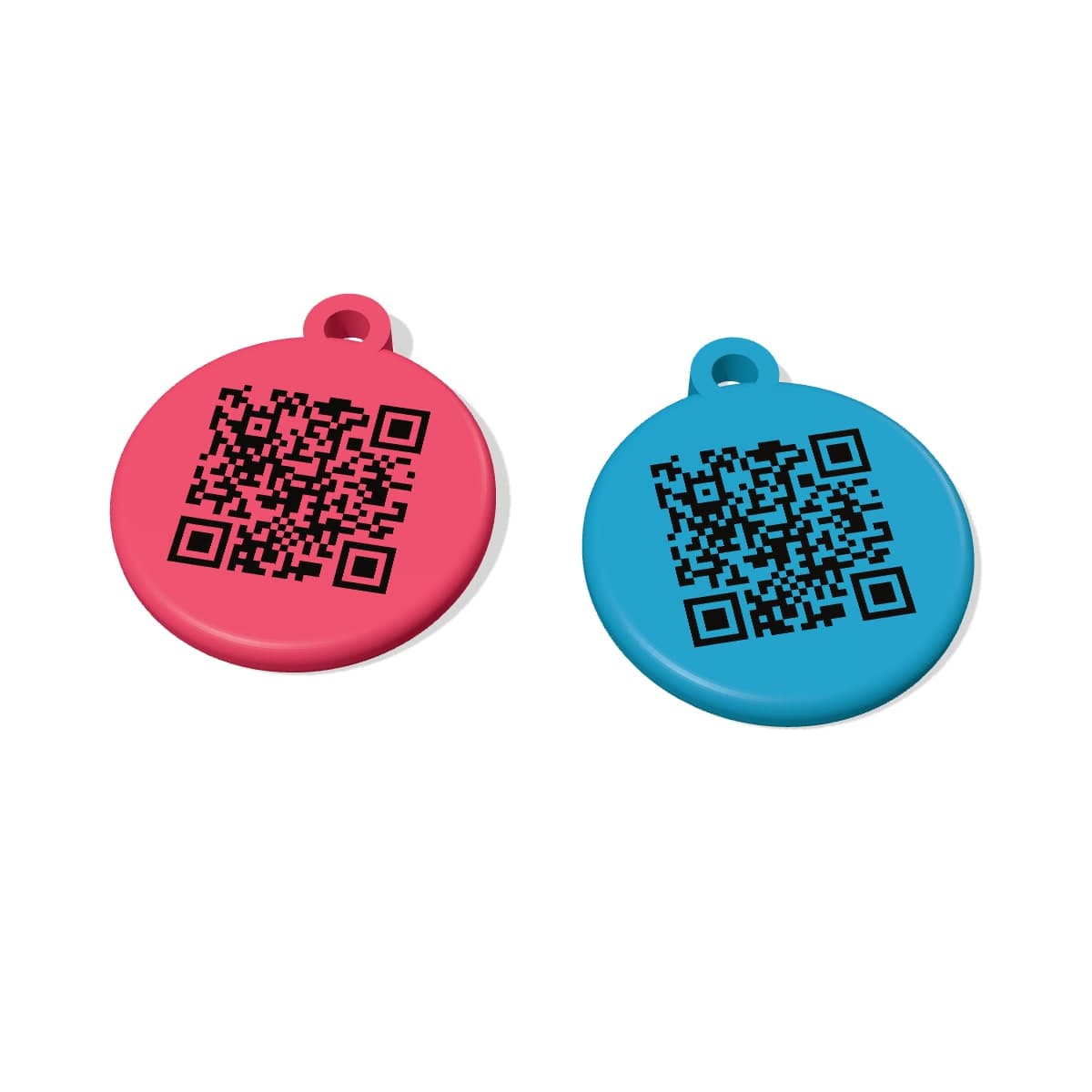
A collar only has room for a few words. A QR code dog tag on the D-ring holds the rest: your dog's photo, medical notes, a way for a finder to message you without seeing your number, and lost mode, which emails you when the tag is scanned. Its details can be changed online any time. If your collar doesn't show your details, a personalised dog tag can: your surname, house number and postcode on the back, with the QR code on the front.
Quick answers
Is a personalised dog collar enough for UK law?+
Yes, if it shows your name and address. The Control of Dogs Order 1992 allows the details to be on the collar itself, or on a plate or badge attached to it.
Does my dog still need a tag if the collar has my details?+
Not for the law. A tag can still add what a collar can't hold, like a photo, medical notes or a way for a finder to message you.
Does a personalised harness count?+
The law talks about a collar, so the safest option is a collar with your name and address on it, even if you walk your dog on a harness.
Should I put my dog's name on the collar?+
It's up to you. The law doesn't ask for it, and The Mayhew advises leaving it off, so a thief can't call the dog by name.
Sources (4)
This guide is general information, not legal or veterinary advice. How we write our guides