Do dogs have to be microchipped? UK dog microchipping law (2026)
Updated 5 October 2026 · 6 min read
Yes. Every dog in England, Wales and Scotland must be microchipped and registered on an approved database once it's 8 weeks old, and in Northern Ireland a dog can't be licensed without a chip. The law has applied to dogs since 6 April 2016. Here's what it asks of owners, breeders and anyone taking on a dog, and what happens if a dog isn't chipped.
Check a microchip number →Paste a chip number to check it's the right shape and see where it might be registered.What the law says in England
- Every dog older than 8 weeks must be microchipped, and the chip must be registered on one of the government-approved databases with the keeper's name, address and phone number.
- The rule has applied since 6 April 2016. Since 16 May 2023 it has been part of the Microchipping of Cats and Dogs (England) Regulations 2023, which also brought in the rules for cats.
- GOV.UK says you're responsible for keeping the details up to date, for example when you move house or change your number. A chip with old details is the usual reason a found dog can't be returned.
- A dog must still wear a collar and tag with your name and address in public, even if it's microchipped. That's a separate law: see UK dog tag law.
What happens if your dog isn't microchipped?
Council officers, people authorised by the government, and the police, including community support officers, can take a dog to check whether it's chipped, even without the owner's consent. If it isn't, they can give the keeper a notice to have it microchipped within 21 days, and then have it done themselves and charge the keeper.
Ignoring that notice is an offence with a fine of up to £500 (level 2 on the standard scale). So is passing a dog on to a new keeper without a chip, and fitting a chip without being trained to.
Buying, rehoming or giving away a dog
- Puppies must be chipped by the breeder. In law the breeder is the puppy's first keeper, so the chip is registered in the breeder's details first. Licensed breeders must have each puppy microchipped and registered to themselves before it's sold.
- It's an offence to pass a dog on to a new keeper unless it's microchipped (or a vet has certified it can't be).
- The new keeper must then record their name, address and phone number with the database, unless the previous keeper has already done it. Some databases charge for this transfer: see what each database charges.
- GOV.UK says to ask for proof a chip has been fitted before you take on a dog. Our microchip number checker can tell you whether the number looks right.
Which dogs are exempt?
- A dog a vet certifies can't be microchipped for health reasons, for the period written on the certificate. The keeper signs the form, and it stays on the dog's vet record.
- In England and Wales, certified working dogs are left out of the 8-week rule. These are dogs of certain types, such as spaniels, terriers and hunt point retrieve breeds, that a vet certifies are likely to work with the police, the armed forces, rescue, pest control or lawful shooting. Under the tail docking rules they must be microchipped by a vet before they're 3 months old instead.
- Scotland's rules have no working dog exception.
Wales, Scotland and Northern Ireland
- Wales: the Microchipping of Dogs (Wales) Regulations 2015. The same 8-week rule from 6 April 2016, the same £500 fine, and the database also records the keeper's email address and any distinguishing features of the dog.
- Scotland: the Microchipping of Dogs (Scotland) Regulations 2016. The same 8-week rule from 6 April 2016 and a £500 fine, and the regulations say in so many words that keepers must tell the database when their details change.
- Northern Ireland: since 9 April 2012, a council won't issue a dog licence unless the dog is microchipped, and keepers must update the database when their details change. nidirect says every dog must be chipped at eight weeks old. A licence costs £12.50: see dog licences.
Who can fit a microchip, and what if it goes wrong?
A vet or a vet nurse can, and so can people who've passed an approved training course, which is why some councils and rescues offer it. GOV.UK suggests asking your vet, council or local rescue. It usually costs £10 to £30, and some charities do it free: see what microchipping costs.
If a chip stops working, moves from where it was put in, or causes a reaction, the law in England says it must be reported to the government. GOV.UK has a form for it, which goes to Defra.
Dogs coming into the UK
A dog brought into Great Britain must be microchipped before its rabies vaccination, under the pet travel rules. Once it's here, the chip must be registered on a UK approved database within 30 days in England and Scotland. See taking your dog abroad for the rules the other way.
Does microchipping work?
Mostly, when the details are right. The share of dogs microchipped rose from about 75% when the law was announced to about 90% in 2022, according to the government. A Battersea study of council strays, cited in the government's 2021 review, found that 96% of strays with a chip and up-to-date details got home, against 77% with out-of-date details and 40% with no chip at all.
The weak point is the record. In the Dogs Trust Stray Dog Survey 2025, of the chipped strays councils could check, only 31% had the right owner details. So check yours today: our guide to updating microchip details shows how.
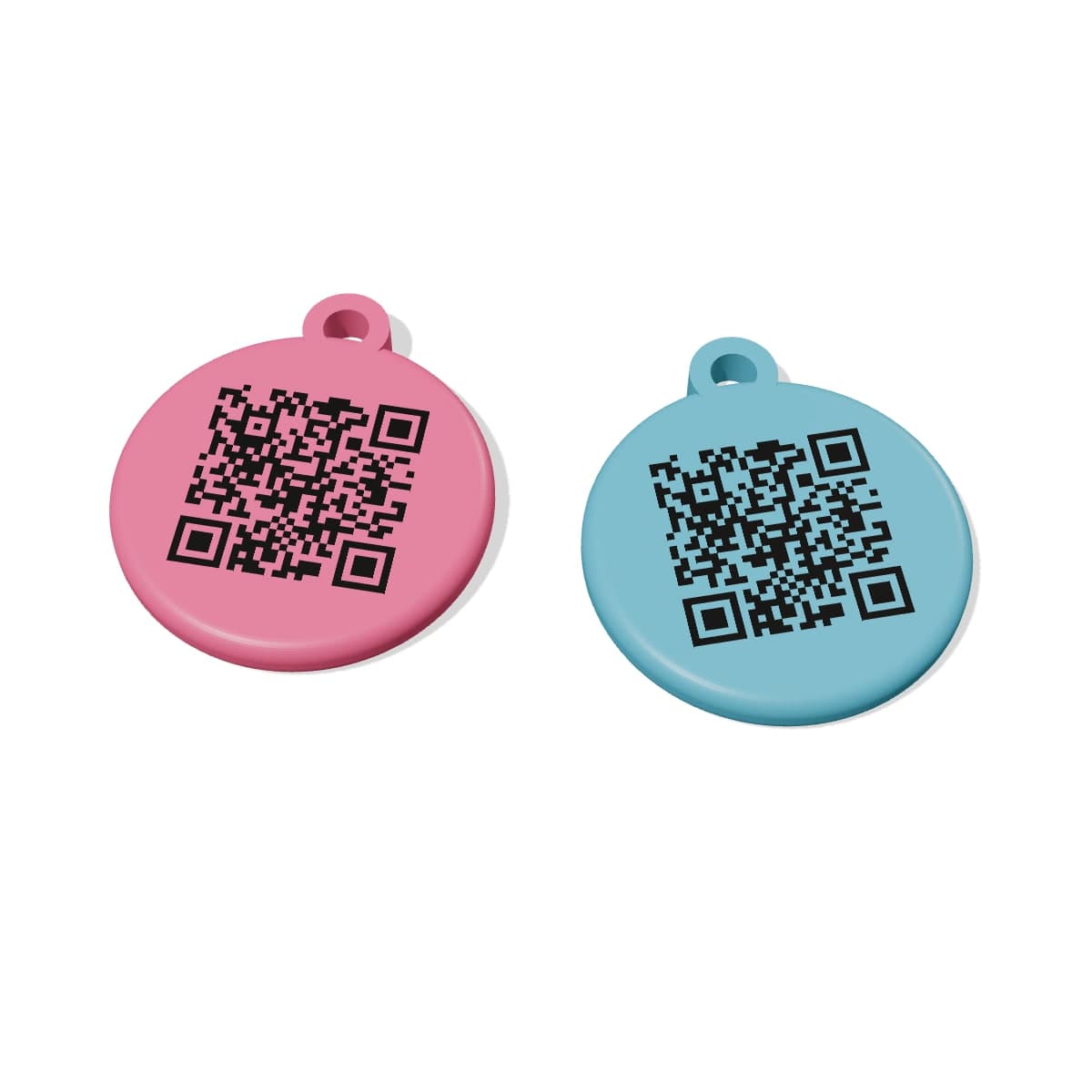
A chip can only be read with a scanner, by a vet, warden or rescue. A QR code dog tag on the collar lets whoever finds your dog reach you on the spot, and you can change its details yourself in a minute.
Quick answers
Is it a legal requirement to microchip a dog in the UK?+
Yes. Dogs in England, Wales and Scotland must be microchipped and registered on an approved database once they're 8 weeks old, and in Northern Ireland a dog can't be licensed without a chip.
What is the fine for not microchipping a dog?+
Up to £500. You'll first be given a notice to have your dog chipped within 21 days, and the fine is for not doing it. Passing an unchipped dog on to a new keeper also carries a fine of up to £500.
When did dog microchipping become law?+
On 6 April 2016 in England, Wales and Scotland, and 9 April 2012 in Northern Ireland, where it's tied to the dog licence.
Does the breeder have to microchip a puppy?+
Yes. The breeder is the puppy's first keeper, so it must be chipped and registered before it goes to a new home, and it's an offence to pass on a puppy without a chip. The new owner then updates the record.
Do I have to update my dog's microchip when I move?+
Yes. GOV.UK says keepers are responsible for keeping the details up to date, and Scotland's and Northern Ireland's rules say so directly. A chip with old details won't get your dog home.
Does a microchipped dog still need a tag?+
Yes. In public, a dog must wear a collar with the owner's name and address on it or on a tag, microchip or not.
Sources
- Get your dog or cat microchipped (GOV.UK)
- The Microchipping of Cats and Dogs (England) Regulations 2023 (legislation.gov.uk)
- Explanatory Memorandum to the 2023 Regulations (legislation.gov.uk)
- The Microchipping of Dogs (Wales) Regulations 2015 (legislation.gov.uk)
- The Microchipping of Dogs (Scotland) Regulations 2016 (legislation.gov.uk)
- Microchip your dog (mygov.scot)
- Dogs (Amendment) Act (Northern Ireland) 2011, section 2 (legislation.gov.uk)
- Dog licensing and microchipping (nidirect)
- Animal Welfare Act 2006, section 6 (legislation.gov.uk)
- Animal Welfare (Licensing of Activities Involving Animals) (England) Regulations 2018 (legislation.gov.uk)
- Implantation of cat and dog microchips (GOV.UK)
- Bring your pet dog, cat or ferret to Great Britain (GOV.UK)
- Post-implementation review of the Microchipping of Dogs (England) Regulations 2015 (Defra, December 2021)
- Stray Dog Survey 2025 (Dogs Trust, PDF)
This guide is general information, not legal or veterinary advice. How we write our guides