Where can you put up lost pet posters? (UK law)
Updated 6 October 2026 · 4 min read
Posters still find pets, but where you put them matters. A poster on someone else's property without consent is fly-posting, fixing anything to a lamp post or a roadside tree without the highway authority's consent is an offence in England and Wales, and some councils say plainly that lost pet notices count. Here's where you can put them, where you can't, and how to make them work.
Free lost pet poster maker →Make a printable A4 poster with your pet's photo in about a minute, with nothing to install.The short version
- Ask first on private property: shops, cafes, vets, pubs, garden centres, community centres. Permission makes it legal and the poster lasts longer.
- Community noticeboards in libraries, village halls, supermarkets and parks are meant for exactly this.
- Lamp posts, street furniture and roadside trees belong to the highway authority, usually the council. Fixing a notice to them without its consent is an offence, and some councils fine lost pet posters as fly-posting while others let tidy ones stay for a short time. Ring the council and ask before you put any up.
- Never on road signs, traffic lights, bridges, or motorway and dual carriageway furniture. That is a safety issue, not a paperwork one.
- Take them down once your pet is home. It is what keeps councils tolerant of the next person.
What the law says
Two laws apply in England. Section 132 of the Highways Act 1980 (England and Wales) makes it an offence to fix "any picture, letter, sign or other mark" to a tree, structure or works on a highway without the highway authority's consent, an authorisation or a reasonable excuse, with a fine of up to level 4 (£2,500) in court. And outdoor adverts are controlled by the Town and Country Planning (Control of Advertisements) (England) Regulations 2007: a poster on a lamp post counts as an advert in planning terms, whatever it's about.
Councils can also issue an on-the-spot fixed penalty instead. North West Leicestershire District Council, for example, lists "notices for lost pets" as fly-posting, with a fixed penalty of £225 per item. Other councils are more relaxed about tidy lost pet notices that come down promptly, which is why it's worth a phone call to yours first.
The places that actually find pets
- Every vet nearby, including out-of-hours practices: found animals are often taken there to be scanned for a microchip.
- Local rescues, kennels and catteries.
- The park or green where your pet was last seen, at the entrances people walk in by.
- Your own street and the six or eight streets around it, especially junctions.
- Shops with foot traffic: the corner shop, the takeaway, the post office, the school gate noticeboard.
- Dog walkers and posties: hand them a poster rather than pinning one up. They cover the whole area every day.
What makes a poster work
- One huge word at the top: LOST, with DOG or CAT underneath.
- A single clear photo, big. Not a collage.
- The road or landmark where they went missing, and the date.
- A phone number in large digits, and nothing else to read.
- Whether they are nervous, and not to chase them, so a sighting doesn't turn into a frightened pet running further away.
- Weatherproofing: a poly pocket or a laminated sheet, taped closed along the top.
Our free lost pet poster maker lays all of that out for you, and there is a version set up for cats. Both print on ordinary A4.
Posters are the slow half
Paper reaches the people who aren't online. The fast half is the phone: the council's dog warden, the microchip database, local Facebook groups and the vets. Work through the lost dog checklist or the lost cat checklist first, then put the posters up.
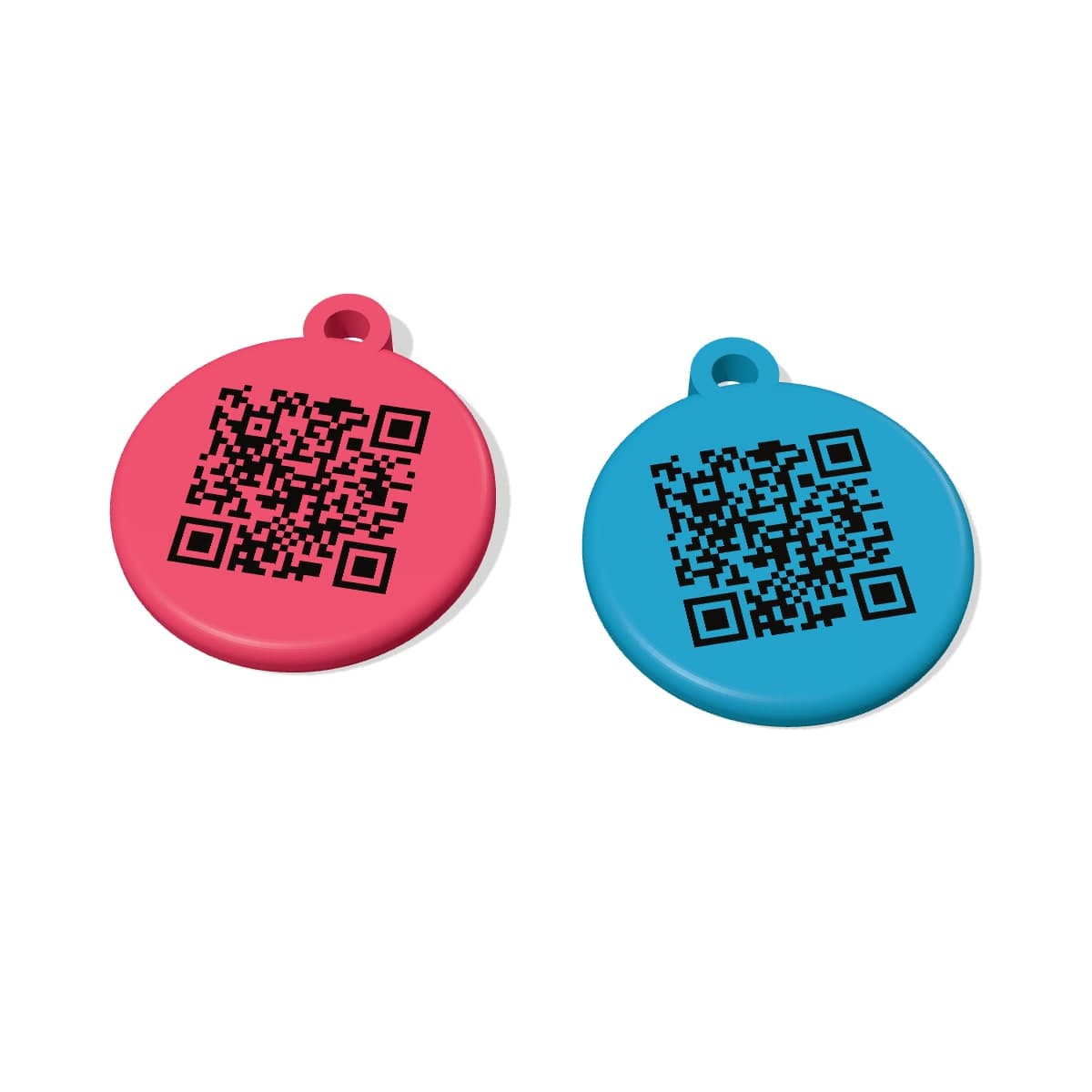
Faster still is being reachable the moment somebody picks your pet up. A QR code pet tag means the person holding your dog or cat scans it and reaches you in seconds, long before anybody reads a poster.
Quick answers
Is it illegal to put lost pet posters on lamp posts in the UK?+
It can be. In England and Wales, fixing a notice to a lamp post or other highway structure without the highway authority's consent or a reasonable excuse is an offence under section 132 of the Highways Act 1980, and some councils fine lost pet posters as fly-posting: North West Leicestershire's fixed penalty is £225 per item. Others tolerate tidy ones for a short time, so ring your council and ask first.
Can I put a poster in a shop window?+
Yes, with the owner's permission. Private property is the easiest and most reliable place to put posters, and shop windows get read.
How long should I leave posters up?+
Until your pet is home, then take them down promptly. Replace any that are rain-damaged: an unreadable poster does nothing and annoys the people you want on your side.
What should a lost pet poster say?+
LOST in large letters, one big photo, the area and date they went missing, a phone number in large digits, and a line telling people not to chase a nervous animal.
Sources (5)
- Outdoor advertisements and signs: a guide for advertisers (GOV.UK)
- The Town and Country Planning (Control of Advertisements) (England) Regulations 2007
- Highways Act 1980, section 132 (legislation.gov.uk)
- Fly-posting: reporting and removal (North West Leicestershire District Council)
- Report a stray dog (GOV.UK)
This guide is general information, not legal or veterinary advice. How we write our guides