Found a lost dog or cat? What to do in the UK
Updated 10 October 2026 · 4 min read
Thank you for stopping to help. Here's how to get them home quickly and safely.
Make a free found pet poster →Add a photo, where you found them and your number, then print it. Takes a minute.1. Keep yourself and the pet safe
- Approach slowly and speak calmly. Let the animal come to you.
- Don't chase a frightened pet, especially near a road.
- If you can, move them somewhere safe, like a garden or your home, and offer some water.
- If the animal is injured, call a vet straight away. In England and Wales you can also call the RSPCA on 0300 1234 999, and in Scotland the Scottish SPCA on 03000 999 999.
2. Look for a tag
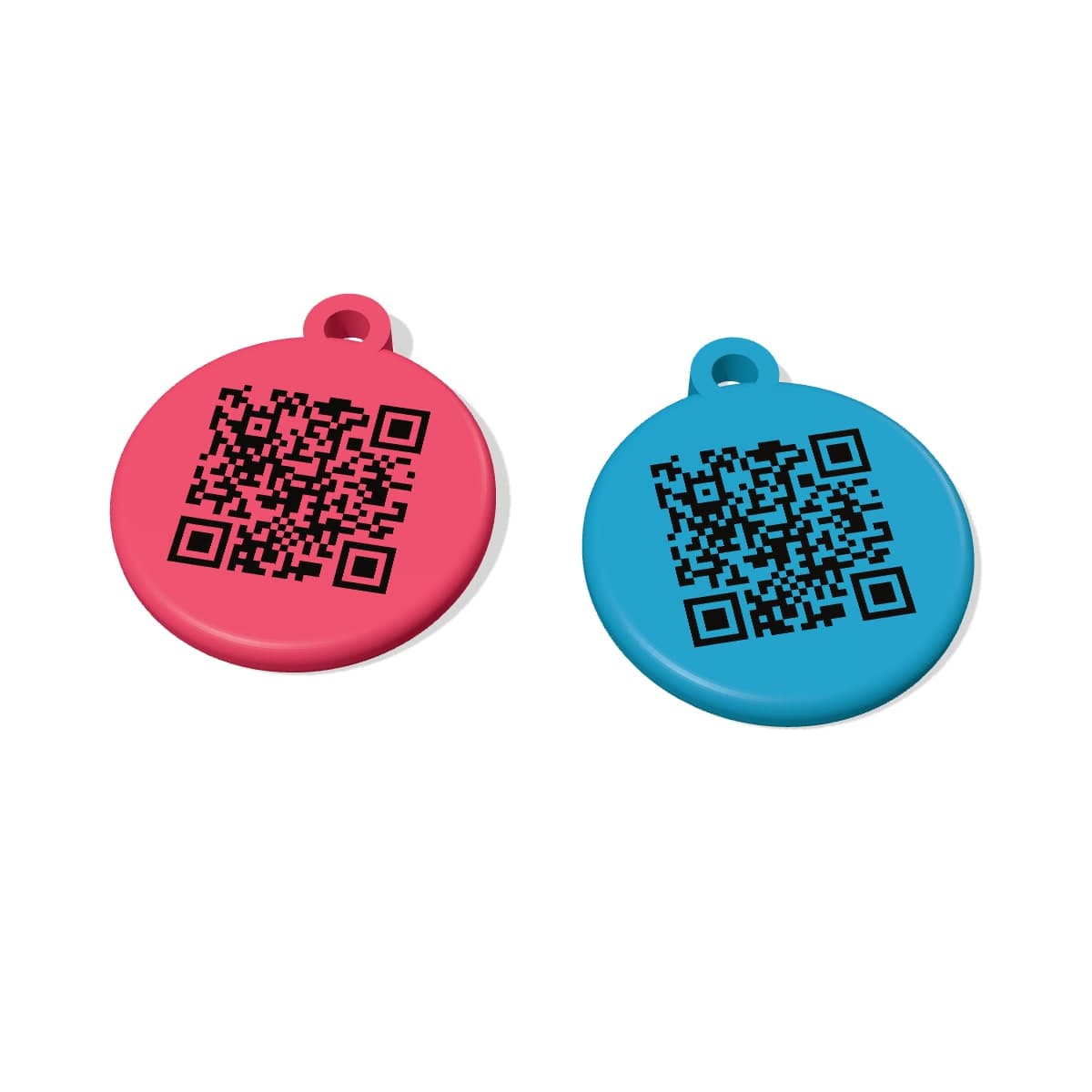
Check the collar for a tag with a name, address or phone number. If there's a QR code, point your phone camera at it. The pet's profile opens in your browser, usually with a way to call or message the owner, and there's nothing to download. If it won't scan, see how to scan a pet tag's QR code.
If it's a PetTag, you can message the owner from the page and share where you are, even if they've kept their phone number private.
3. Get them scanned for a microchip
All dogs in the UK must be microchipped, and so must pet cats in England. Any vet practice can scan the chip, and most do it free of charge. The vet can then look up the chip and contact the owner for you. Your phone can't read it, though: here's why a phone can't scan a pet microchip.
If it's a dog: tell the council
If you find a stray dog and can't contact the owner, you must report it to your local council. Every council must have an officer for stray dogs, usually called the dog warden, and GOV.UK can find your council from your postcode. The warden keeps the dog safe while the council tries to find its owner.
That's the law: under section 150 of the Environmental Protection Act 1990, whoever finds a stray dog must straight away either return it to its owner, or take it to the council and say where it was found.
If you'd like to keep the dog, tell the council. If they agree, you must keep it for at least one month in England and Wales, or two months in Scotland, where it becomes yours if nobody claims it in that time.
What happens to a stray dog at the council
The council keeps a stray dog for seven clear days. If its collar has an address, or the owner is known, the council writes to them, and the owner pays the cost of its keep to get it back. If nobody claims it in that time, the council can rehome it (section 149 of the same Act).
Only about 38% of the dogs councils took in last year got back to their owners, according to the Dogs Trust Stray Dog Survey, so anything you do to spread the word really helps. There are more figures in our UK pet statistics.
If it's a cat: check it's really lost
Cats often roam a wide area, so a cat outdoors isn't always lost. Cats Protection says a cat that's friendly, well groomed and a healthy weight is probably someone's pet out exploring. One that's unkempt and underweight, seems unwell or injured, or turns up in the same place for days may need help. Ask neighbours if they know the cat before taking it in.
To find out where a friendly cat lives, Cats Protection suggests a paper collar: print theirs, add your number, and fit it loosely enough to slide two fingers underneath, so the owner can get in touch. It also advises against feeding a cat you think is lost, because it keeps the cat coming back to you instead of going home.
If you think the cat is lost, ask a vet to scan it for a microchip, and contact Cats Protection or a local rescue centre. If you find kittens on their own, wait three to four hours to see if their mother comes back before you step in.
4. Spread the word
- Put up a FOUND poster near where you found them. Our free found pet poster maker makes one in a minute, with tear-off strips for your number.
- Post a clear photo in local Facebook groups and on Nextdoor, saying where and when you found the pet.
- Keep one detail back, like a marking or the colour of the collar, so you can check that whoever gets in touch is the real owner.
- Register the pet as found on a UK lost-and-found site such as Animal Search UK or DogLost.
- Tell local vets and rescue centres, because owners often call them first.
5. When the owner gets in touch
Ask them to describe the pet or show you photos before you hand them over. If you're unsure, arrange the handover at a vet practice, or ask the council for advice.
Quick answers
Do I have to report a stray dog?+
Yes. If you find a stray dog and can't contact the owner, you must report it to your local council.
Will a vet scan a found pet for a microchip for free?+
Most vet practices will scan a found pet for a microchip free of charge. It's worth calling ahead first.
Can I keep a stray dog I found?+
Tell the council you'd like to keep the dog. If they agree, you must keep it for at least one month in England and Wales, or two months in Scotland.
Could I get in trouble for keeping a dog I found?+
Yes, if you hold on to it. Since August 2024, keeping a dog from its owner can be dog abduction in England and Northern Ireland. In England, a finder has a defence if they believed it was a stray, took all reasonable steps to return it or hand it to the council as section 150 of the Environmental Protection Act 1990 asks, and didn't keep it for more than 96 hours. So report a found dog to the council straight away.
How long does the council keep a stray dog?+
Seven clear days. The council writes to the owner if it can tell who they are, and the owner pays the cost of its keep to get it back. After that the council can rehome it.
Should I feed a cat I think is lost?+
Cats Protection says it's best not to, because feeding keeps the cat coming back to you instead of going home. Try a paper collar with your number, and get it scanned for a microchip.
Sources (7)
- Report a stray dog (GOV.UK)
- Environmental Protection Act 1990, section 150: delivery of stray dogs (legislation.gov.uk)
- Environmental Protection Act 1990, section 149: seizure of stray dogs (legislation.gov.uk)
- Stray Dog Survey 2025 (Dogs Trust, PDF)
- Get your dog or cat microchipped (GOV.UK)
- Found a cat? (Cats Protection)
- Pet Abduction Act 2024, section 1 (legislation.gov.uk)
This guide is general information, not legal or veterinary advice. How we write our guides