QR code pet tags in the UK: how they work and the law
Updated 18 October 2026 · 5 min read
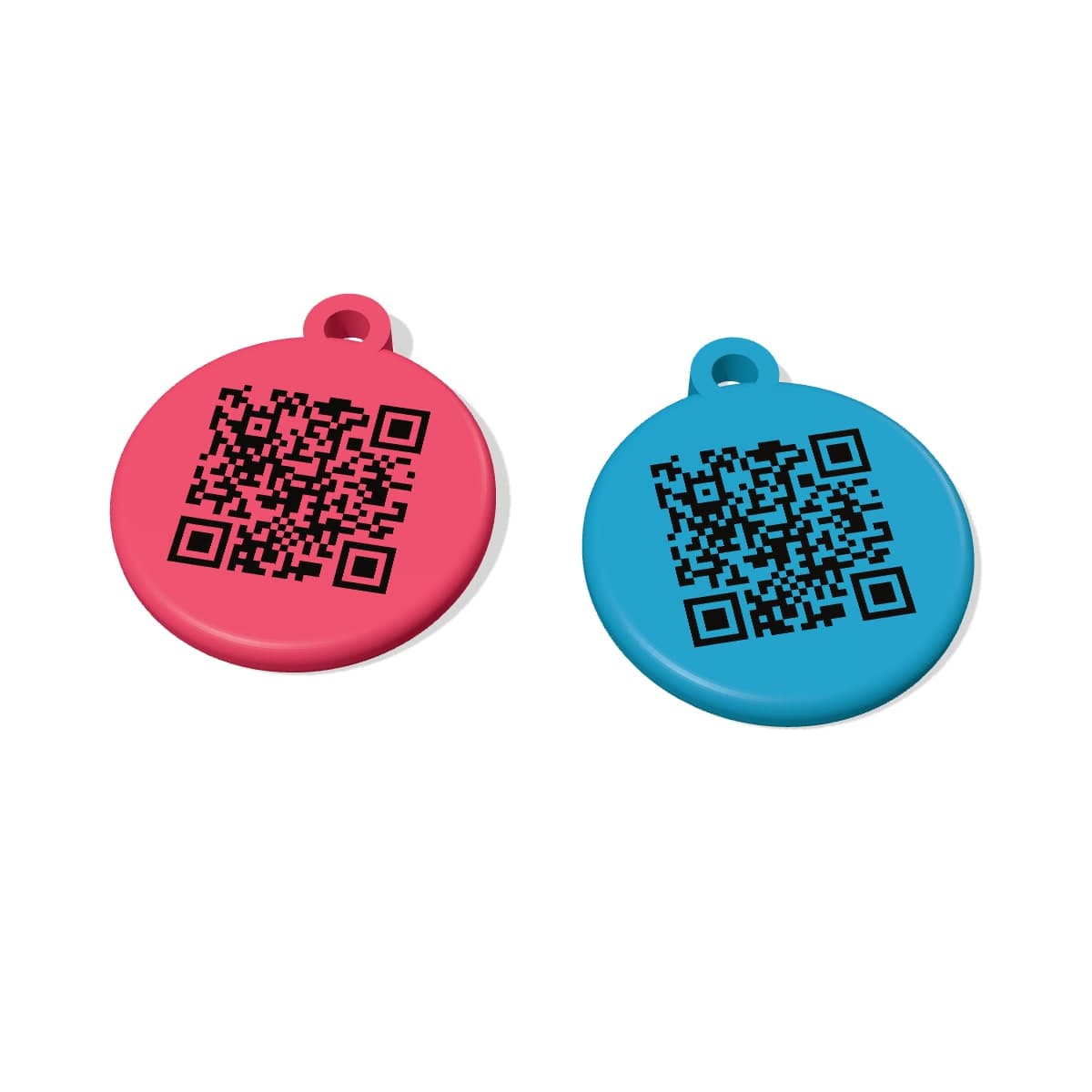
A QR code pet tag is a collar tag with a printed QR code. When someone finds your pet, they point their phone camera at the code and your pet's profile opens in their browser, so they can contact you in seconds. Ours, QR code dog tags and QR code cat tags, are £10 with no subscription.
How it works
- Each tag has its own code, linked to a profile you set up with your pet's photo and details.
- Someone finds your pet and scans the tag with their phone camera.
- Your pet's profile opens in the browser, with ways to call or message you.
- They can send you a message with their location, and if your pet is marked as lost, you're emailed when the tag is scanned.
What the finder sees
- Your pet's photo and name, so they know they've got the right pet.
- A clear “reported missing” alert, if you've turned on lost mode.
- Buttons to call or email you, if you've chosen to show them, and your emergency contact.
- A form to message you and share where they are, which works even if your number is hidden.
- Anything they need to know straight away, like medication or “nervous with strangers”.
Does the finder need an app?
No. The camera on any modern iPhone or Android phone can read a QR code on its own: on an iPhone, Apple's instructions are to point the Camera at the code and tap the link that appears. There's nothing to download and nothing to type, and the National Cyber Security Centre's advice is to use the phone's built-in scanner rather than a downloaded app anyway.
What can go on the profile?
- Your pet's photo, name and breed
- Medical notes, such as allergies or medication (see medical alert pet tags)
- Behaviour notes, like “nervous with strangers”
- An emergency contact (see our pet emergency plan)
- Your phone number and email, only if you choose to show them
Finders can always message you through the page, so your details can stay private.
Lost mode
Keeping it up to date
Moved house or changed your number? Update the profile from your dashboard and the tag shows the new details straight away. Going away? Add your pet sitter as the emergency contact before you go, and change it back when you're home. With an engraved tag, you'd need a new tag each time.
If the tag itself gets lost or damaged, order a replacement and move your pet's profile onto it. The profile stays exactly as it was.
QR tag or engraved tag?
An engraved tag is simple and anyone can read it, but it only fits a few words, shows your details to everyone and can't be changed if you move or change your number. A QR tag holds much more, you can update it any time and you decide what finders see.
In the UK, dogs in public must wear your name and address on their collar or a tag, so a QR tag needs them too: on the back of the same tag, like a personalised dog tag, or on an engraved tag or the collar alongside it.
Batteries, charging and subscriptions
A QR tag is printed, so there's nothing to charge and nothing to run flat. A PetTag QR code pet tag is a one-off purchase from £10 with no subscription, and your pet's profile stays free for life. Other tags charge monthly for the profile: what smart pet tags cost goes through what to check.
Quick answers
Are QR code pet tags legal in the UK?+
Yes, but for dogs a QR code isn't enough on its own. In a public place a dog must wear its owner's name and address on its collar or a tag attached to it (Control of Dogs Order 1992), and a QR code doesn't show those, so add them to the back of the tag (a personalised PetTag does) or keep an engraved tag or a collar with your details on as well. No law covers cat tags, though cats in England must be microchipped.
Do QR pet tags work on every phone?+
They work on any modern iPhone or Android phone with a camera. The finder's phone needs an internet connection to open the profile.
Does a QR tag need phone signal to work?+
The finder's phone needs a data connection to open the profile. That's one more reason to have your name and address on the collar or the back of the tag as well.
Is there a monthly fee?+
No. A PetTag is a one-off purchase, and your pet's profile stays free for life.
Can cats wear a QR tag?+
Yes, on a quick-release collar that pops open if it catches on something. Keep what's on the collar small and light.
Can a finder see my address?+
No. A PetTag profile never shows your address, and your phone number and email are hidden unless you choose to show them. Finders can message you through the page instead.
Can I make my own QR code pet tag?+
Yes, but check which kind of code you make: some free QR websites switch their codes off when a trial ends. Our guide to making your own QR code pet tag explains what to look out for.
Sources (6)
- The Control of Dogs Order 1992 (legislation.gov.uk)
- Get your dog or cat microchipped (GOV.UK)
- Scan a QR code with your iPhone camera (Apple Support)
- QR codes: what's the real risk? (National Cyber Security Centre, February 2024)
- Lord and others (2007), Search and identification methods that owners use to find a lost dog, JAVMA 230(2)
- Weiss, Slater and Lord (2012), Frequency of lost dogs and cats in the United States and the methods used to locate them, Animals 2(2)
This guide is general information, not legal or veterinary advice. How we write our guides