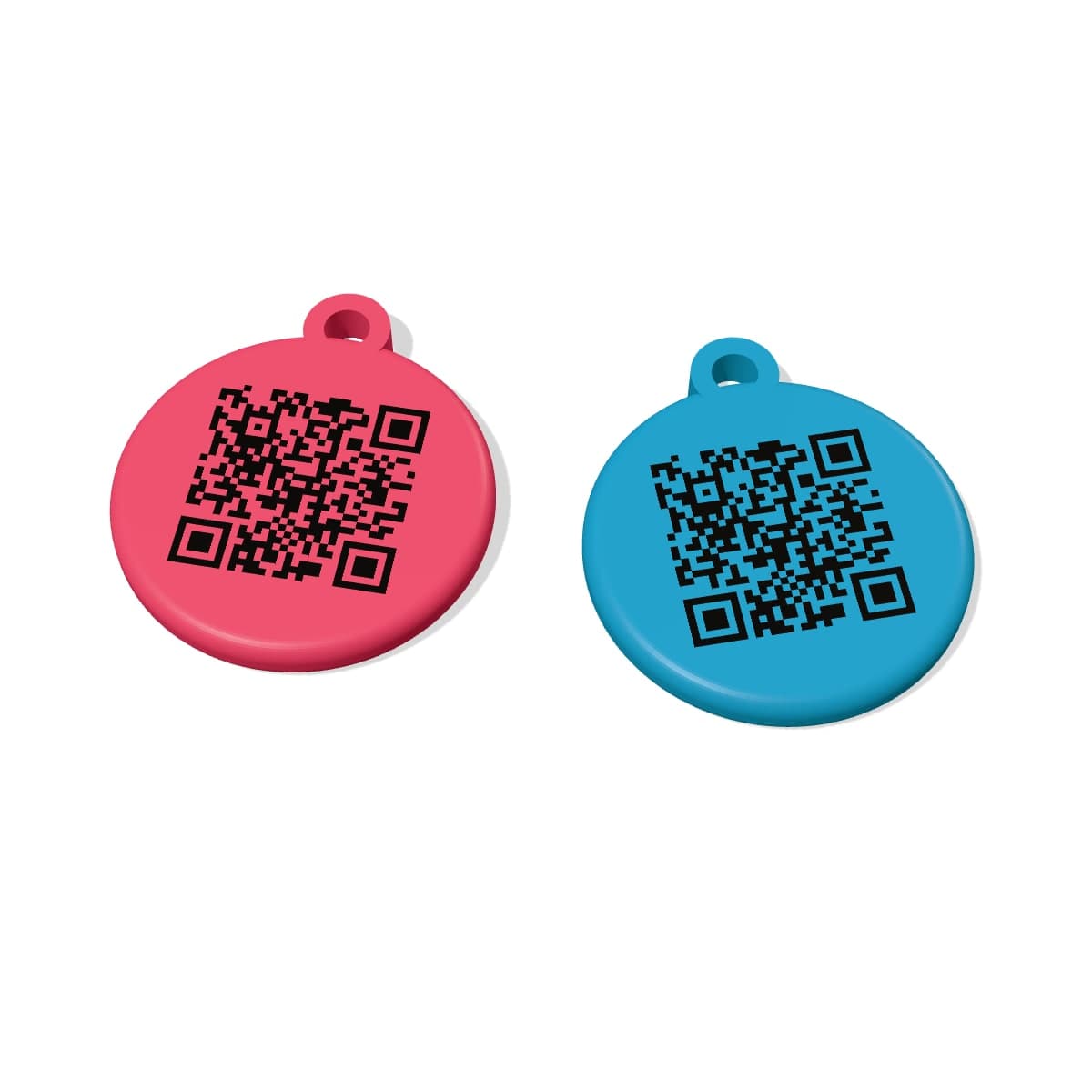
Are QR code dog tags legal in the UK? What the law says
By Arthur, who makes PetTag · Updated 18 November 2026 · 4 min read
Yes, a QR code dog tag is legal in the UK, and no law bans one. But the code on its own doesn't do what the law asks: when your dog is in a public place it must wear your name and address, written on its collar or on a tag. So a QR tag needs those words with it. Here's what the law says, and three ways to get it right.
Free dog tag wording maker →Type your details to lay out the wording, check it has what the law asks for, and preview the tag.The short answer
- A QR code dog tag is legal to buy and legal for your dog to wear.
- A QR code alone doesn't meet the Control of Dogs Order 1992, because it doesn't show your name and address.
- Your dog is covered if your name and address are on the back of the same tag, on a second tag, or on the collar itself.
- A phone number is not what the law asks for. It's useful, but it doesn't replace the name and address.
- The rule is for dogs in public places. There's no tag law for cats.
What the law asks for
The rule is in the Control of Dogs Order 1992. It says every dog “while in a highway or in a place of public resort shall wear a collar with the name and address of the owner inscribed on the collar or on a plate or badge attached to it.”
So the law isn't about what kind of tag your dog wears. It's about two things being readable on the dog: your name, and your address. Our guide to UK dog collar law covers the Order in full, including the dogs that are exempt.
Why a QR code on its own isn't enough
A QR code holds a web address. Your name and address aren't written on the tag: they're on a page that opens when someone scans it. The Order asks for them to be on the collar, or on a plate or badge attached to it.
There's a practical side too. A code needs a phone with a camera and a data connection. And the Order lets a council dog warden pick up a dog that's in public without a collar and tag showing those details, and treat it as a stray. Getting a dog back from the warden means paying a fee and kennel costs.
This is true of every QR tag, ours included. A plain PetTag, like any tag with only a code on it, needs your name and address somewhere else on the dog.
Three ways to make a QR dog tag meet the law
- Put your name and address on the back of the same tag. Some QR tags are sold with the back engraved or printed. A personalised PetTag has your surname, house number or name, and postcode on the back for £3 more, so one tag does both jobs.
- Wear a small engraved tag next to the QR tag. The engraved one carries your name and address, and the QR tag carries everything else. Our guide to where to get a dog tag engraved has places and prices.
- Use a collar with your details on it. A collar with your name and address stitched, printed or on a riveted plate counts, because the Order allows them on the collar itself: see personalised dog collars.
Whichever you choose, check the lettering now and then. Engraving wears smooth against the buckle, and a tag nobody can read doesn't help you or meet the law.
What to put on it
- Your name. Your surname on its own is fine.
- Your address. Your house number or name and your postcode is the shortest way to fit it on a small tag.
- A phone number isn't required, but it's the quickest way for someone to reach you if there's room.
The law doesn't ask for your dog's name. Our what to put on a dog tag page lays the wording out and checks it for you.
A one-minute check of the tag your dog wears now
- Look at both sides of the tag and at the collar. Can you read a name and an address without a phone?
- If there's only a code, or only a phone number, add your name and address in one of the three ways above.
- If the details are there, check they're still yours. A QR profile can be changed in a minute, but engraved or printed words can't, so a house move means a new tag or collar.
- Check the collar is on whenever your dog is out in public, even if you clip the lead to a harness.
The fine
Not following the Order is an offence for the owner, or whoever is in charge of the dog, under the Animal Health Act 1981, with a fine of up to level 5 on the standard scale (section 75). In England and Wales that has meant a fine of any amount since 2015, when the old £5,000 cap was lifted.
Microchipped dogs still need the name and address
A microchip is a separate legal requirement, and it doesn't replace the tag. GOV.UK says a microchipped dog “must still wear a collar and tag with your name and address when in a public place.” A chip can only be read with a scanner, usually at a vet or the council: see dog microchipping law.
So why have a QR code at all?
Because a name and an address get a dog identified, and a QR code gets it home quickly. A finder scans the code and sees your dog's photo, any medical or behaviour notes, and a way to message you straight away, without your phone number being shown. You can change it all without buying a new tag.
With your name and address on the back, a QR code dog tag covers both. Smaller sizes for small dogs and puppies, like our Small and Mini, have room for the code only, so they go with a collar or an engraved tag that has your details on: see small dog tags. To see how UK tags differ, there's our comparison of QR code dog tags.
What about cats?
The Control of Dogs Order only covers dogs, so a QR code cat tag needs nothing else by law. In England, cats must be microchipped by the time they're 20 weeks old.
Quick answers
Are QR code dog tags legal in the UK?+
Yes. They're legal to buy and wear. But a QR code alone doesn't meet the Control of Dogs Order 1992, which says a dog in a public place must wear its owner's name and address on its collar or on a tag attached to it. Add them to the back of the tag, a second tag or the collar.
Can a QR code tag replace an engraved dog tag?+
Only if the QR tag also has your name and address written on it, for example on the back. A tag with a code and nothing else needs an engraved tag or a collar with your details on alongside it.
Is a phone number on a dog tag enough for UK law?+
No. The law asks for the owner's name and address. A phone number is optional, though it's the quickest way for a finder to reach you.
Could I be fined if my dog only wears a QR code tag?+
Yes, if your name and address aren't on the collar or a tag when your dog is in a public place. It's an offence under the Animal Health Act 1981, with a fine of any amount in England and Wales. The council's dog warden can also pick the dog up and treat it as a stray.
Does my address have to be written out in full?+
The Order says “name and address” and doesn't say how much of it. Your house number or name and your postcode is the usual short form, and it fits on a small tag.
Does a PetTag meet the dog tag law?+
With the personalised back, yes: your surname, house number or name and postcode are printed on the back of the standard tag for £3 more. A plain PetTag, or a Small or Mini, shows the QR code only, so it goes with a collar or an engraved tag that has your name and address on.
Do QR code cat tags need a name and address?+
No. The tag law covers dogs only. Cats in England must be microchipped by 20 weeks old, and a tag is your choice.
Sources (4)
This guide is general information, not legal or veterinary advice. How we write our guides