Harness or collar for your dog? What's best, and what the law says
Updated 24 September 2026 · 4 min read
For most UK dogs the answer is both. A harness takes the pull of the lead away from the neck, and a collar carries the name and address the law asks for in public. Here's when each matters, and how to fit them.
Why a harness helps a dog that pulls
Blue Cross says coughing is common when a dog pulls on the lead and the collar presses on the windpipe, and that a harness can help reduce coughing and prevent damage to the neck or windpipe. Training your dog not to pull helps too.
Battersea's advice is that a good harness avoids pressure on the neck and lets the shoulders move freely. Look for a Y-shaped front.
Why a collar still matters
In a public place, the Control of Dogs Order 1992 says a dog must wear a collar with the owner's name and address on it, or on a tag attached to it. The Order talks about a collar, so the safest way to meet it is a collar with your details, even if the lead clips to a harness.
Battersea calls a flat collar a simple, safe choice for most dogs. Our guide to UK dog tag law covers who's exempt and what to put on the tag.
Wearing both
- Clip the lead to the harness, and keep a light collar on for the ID.
- Put your name and address on the collar or a tag on it. A personalised collar counts too.
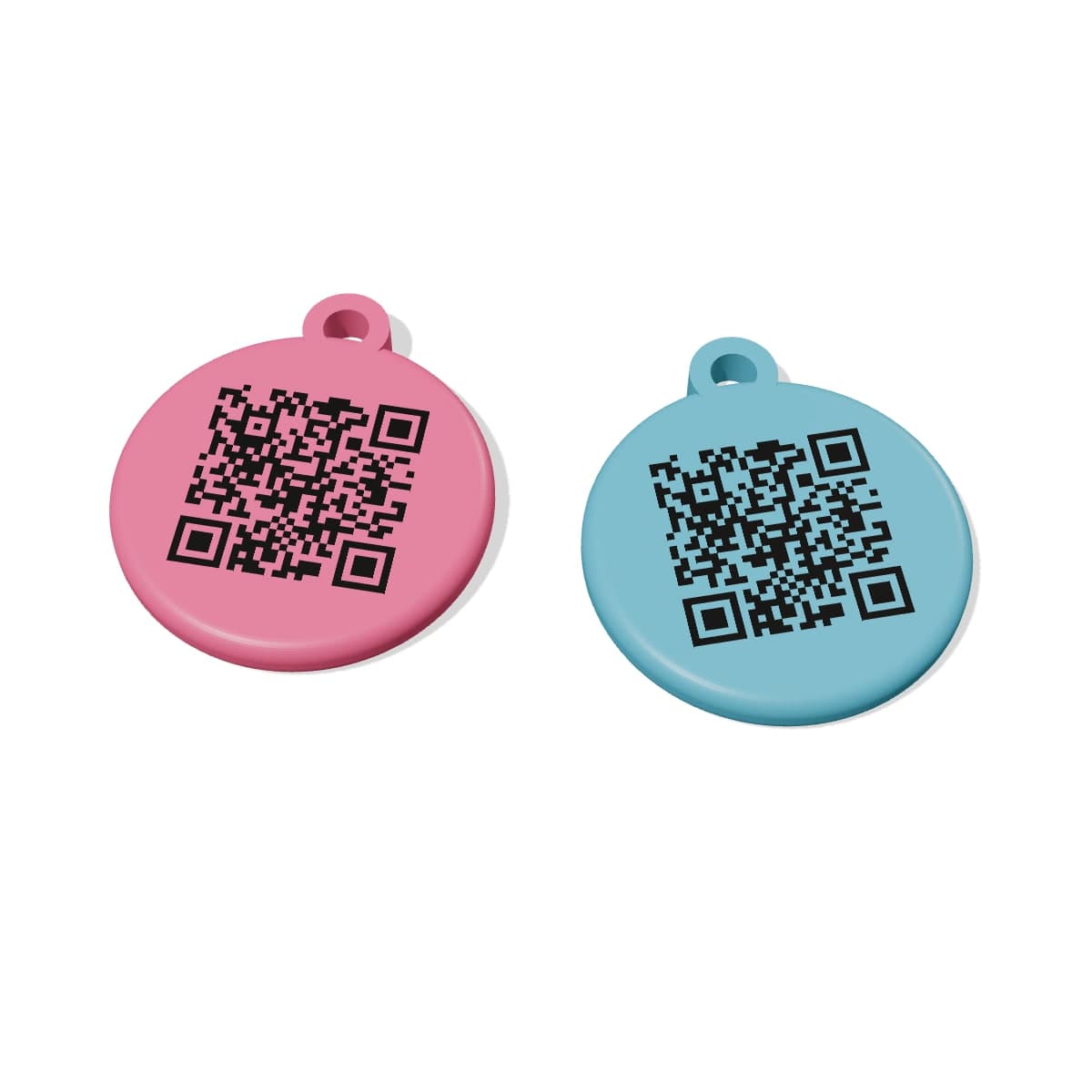
- Hang a QR code dog tag beside it, so whoever finds your dog can reach you straight away and see any medical notes.
Getting the fit right
- Collar: snug, with room for two fingers between the collar and your dog's neck. Our guide to how tight a dog's collar should be has more.
- Harness: no pressure on the neck, and the shoulders free to move.
- Check both as a puppy grows, and whenever your dog's weight changes.
If your dog can't wear a collar
If a medical reason means your dog can't wear a collar, talk to your vet, and put a tag with your details on the harness so anyone who finds your dog can still reach you.
Quick answers
Is a harness better than a collar?+
For a dog that pulls, a harness is kinder on the neck: Blue Cross says it can help reduce coughing and prevent damage to the neck or windpipe. Your dog still needs a collar with your details in public.
Can I walk my dog on a harness without a collar?+
The Control of Dogs Order 1992 asks for a collar with your name and address in a public place, so the safest option is to keep a collar with your details on, even if the lead clips to a harness.
Can I put my dog's ID tag on the harness?+
You can, and it helps whoever finds your dog, but the law talks about a collar, so keep your name and address on a collar as well.
How tight should a dog collar be?+
Snug, with room for two fingers between the collar and your dog's neck.
Sources
- Why do dogs cough? (Blue Cross)
- Train your dog to wear a collar, lead or harness (Battersea)
- The Control of Dogs Order 1992 (legislation.gov.uk)
This guide is general information, not legal or veterinary advice. How we write our guides