How tight should a dog collar be? Too tight vs too loose
Updated 6 October 2026 · 4 min read
Two fingers, flat, between the collar and your dog's neck. That's the fit Battersea gives for a flat collar: snug enough that it won't come off over your dog's head if they pull back, and loose enough that it doesn't rub or press on their throat. Here's how to check it, the signs it's wrong, and when to check again.
The two-finger rule
Battersea's advice is that a flat collar should fit snugly, with room for two fingers between the collar and your dog's neck. Slide two fingers flat under the collar: they should go in without forcing, with no room for a third.
Then do the test that matters most. With your dog standing, gently try to ease the collar forward over their ears without undoing it. A dog that slips a collar pulls its head down and backs away, so if the collar will go over the head now, it will go over the head then. On a small dog, two adult fingers can be a lot of slack, so this second check matters even more.
Signs a dog collar is too loose
- You can fit three or more fingers under it.
- You can ease it over your dog's ears without undoing the buckle.
- The tag and buckle swing round under the chin as soon as you let go of it.
A frightened dog that pulls back at a kerb, at the vet or when fireworks go off can slip a loose collar in a second, so a loose fit matters as much as a tight one.
Greyhounds, whippets, lurchers and other sighthounds have heads not much wider than their necks, so a flat collar that fits the neck can still slip over the head. Battersea suggests walking a greyhound on a well-fitted harness with the lead clipped to the back, plus a second lead on the collar or a martingale collar, which tightens a limited amount when the lead pulls.
Signs a dog collar is too tight
- You can't get two fingers under it without forcing them.
- A flattened line, broken hairs or a bald patch in the coat where the collar sits.
- Red, damp or sore skin under the collar.
- Your dog scratches at the collar or keeps trying to get it off.
- Coughing or gagging when the lead goes tight. A collar that fits can do this too in a dog that pulls, and Blue Cross says using a harness instead can help reduce coughing and prevent damage to the neck or windpipe.
Any smell, discharge or broken skin under a collar means a vet appointment, not just a looser buckle.
When to check it again
- Puppies: every week or two. Blue Cross reminds owners that puppies grow quickly and a collar can become too tight, and the Royal Kennel Club suggests a lightweight collar that's easy to adjust, rather than one they'll grow into.
- After a clip, a moult or a big change in coat: a spaniel in August is a different size from the same spaniel in February.
- After your dog gains or loses weight, including on a diet your vet has suggested.
- Any time the collar has taken a hard pull, or the buckle or clip looks worn.
What has to be on it
Fit is only half the job. In the UK, the Control of Dogs Order 1992 says a dog in a public place must wear a collar with the owner's name and address on it, or on a plate or badge attached to it. A phone number is optional but sensible, and a microchip doesn't replace the tag. The details are in our UK dog collar and tag law guide.
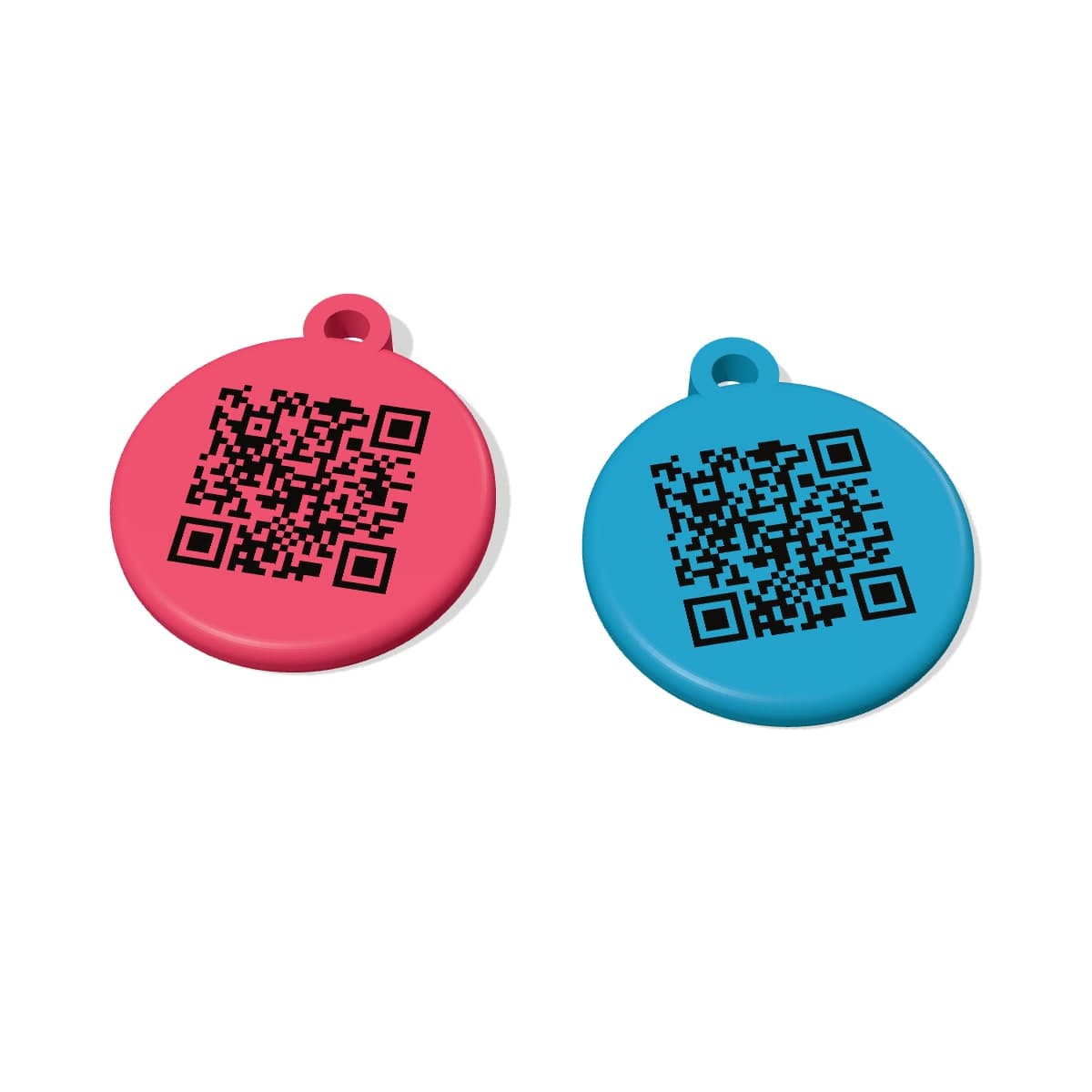
Check the tag with the same hands-on habit as the collar: engraving wears smooth and split rings work loose, as our guide to why dog tags wear out explains. On our QR code dog tags the code is printed into the tag as a flush black inlay, so there's no lettering to polish away, and a small engraved tag with your name and address alongside it covers the law, since a QR code on its own doesn't show them. The case for both is in QR tag or engraved tag.
Collar or harness?
A harness spreads pressure across the chest and is kinder for dogs that pull, have breathing trouble or a delicate neck. It doesn't replace the collar in law, though: the Order talks about a collar, so the safest way to meet it is a light collar with the tag on, even if you clip the lead to a harness. Our guide to harness or collar has more.
Battersea says a good harness should avoid pressure on your dog's neck and allow free shoulder movement. Check it doesn't twist or rub under the front legs.
Quick answers
How tight should a dog's collar be?+
Battersea's advice is snug, with room for two fingers between the collar and your dog's neck. Check it with your dog standing, and make sure it can't be eased over their ears without undoing it.
How do I know if my dog's collar is too tight?+
You can't fit two fingers under it without forcing them, the coat is flattened or bald where it sits, the skin under it is red or sore, or your dog keeps scratching at it. Loosen it, and see a vet if the skin is broken.
How do I stop my dog slipping out of its collar?+
Fit it to the two-finger rule and check it can't go over the ears. For narrow-headed breeds like greyhounds and whippets, Battersea suggests a well-fitted harness with a second lead on the collar, or a martingale collar, which tightens a limited amount when the lead pulls.
Should my dog wear its collar indoors?+
Many dogs do, but collars can catch, especially in a crate, and the Royal Kennel Club says to always take a puppy's collar off in its crate. If you take it off at home, put it back on before the front door opens: the law only asks for it in public, but that's when a dog gets loose. See should my dog wear a collar all the time?
How often should I check the fit?+
Every week or two for a puppy, and after any coat change, weight change or hard pull for an adult. It takes ten seconds.
Sources (8)
- Train your dog to wear a collar, lead or harness (Battersea)
- Rehoming a retired greyhound (Battersea)
- How do I look after my new puppy? (Blue Cross)
- How do I collar and lead train my dog? (Royal Kennel Club)
- The Control of Dogs Order 1992, article 2
- Why do dogs cough? (Blue Cross)
- Essential equipment for your puppy or dog (Royal Kennel Club)
- Dog laws for owners (PDSA)
This guide is general information, not legal or veterinary advice. How we write our guides